
Diagnose and Solve Marine Engine Issues: Marine Engine Troubleshooting Tips
Marine engines power boats and keep them running smoothly on the water. When an engine fails, it can ruin a day on the water or cause costly delays. We focus on clear, practical steps to diagnose and solve common marine engine problems. This guide helps boat owners identify issues early and take action to fix them or seek professional help.
Common Signs of Marine Engine Problems
Recognizing early signs of engine trouble saves time and money. Watch for these symptoms:
Engine won’t start: No crank or slow crank when turning the key.
Overheating: Temperature gauge rises quickly or engine shuts down.
Loss of power: Engine runs but lacks usual speed or acceleration.
Unusual noises: Knocking, grinding, or hissing sounds.
Excessive smoke: Black, white, or blue smoke from the exhaust.
Fuel smell or leaks: Strong fuel odor or visible leaks near the engine.
Warning lights: Check engine or oil pressure lights on the dashboard.
Each symptom points to specific issues. Early detection helps prevent major damage.
Marine Engine Troubleshooting Tips
We break down troubleshooting into simple steps. Follow this checklist to identify the root cause:
Check the battery and electrical system
Test battery voltage with a multimeter.
Inspect battery terminals for corrosion.
Ensure all electrical connections are tight.
Inspect the fuel system
Verify fuel tank has clean, fresh fuel.
Check fuel lines for cracks or leaks.
Replace clogged fuel filters.
Examine the cooling system
Confirm water intake is clear of debris.
Check coolant levels and top off if low.
Inspect hoses and clamps for leaks.
Look at the ignition system
Test spark plugs for wear or fouling.
Replace faulty spark plugs.
Check ignition coils and wiring.
Assess the air intake
Clean or replace air filters.
Ensure no blockages in air intake ducts.
Monitor engine oil
Check oil level and quality.
Change oil and filter if dirty or old.
Listen for unusual sounds
Identify knocking or grinding.
Investigate belt tension and condition.
Check exhaust system
Look for blockages or leaks.
Inspect exhaust manifold and gaskets.
If these steps do not resolve the issue, contact professionals for marine engine repair services.
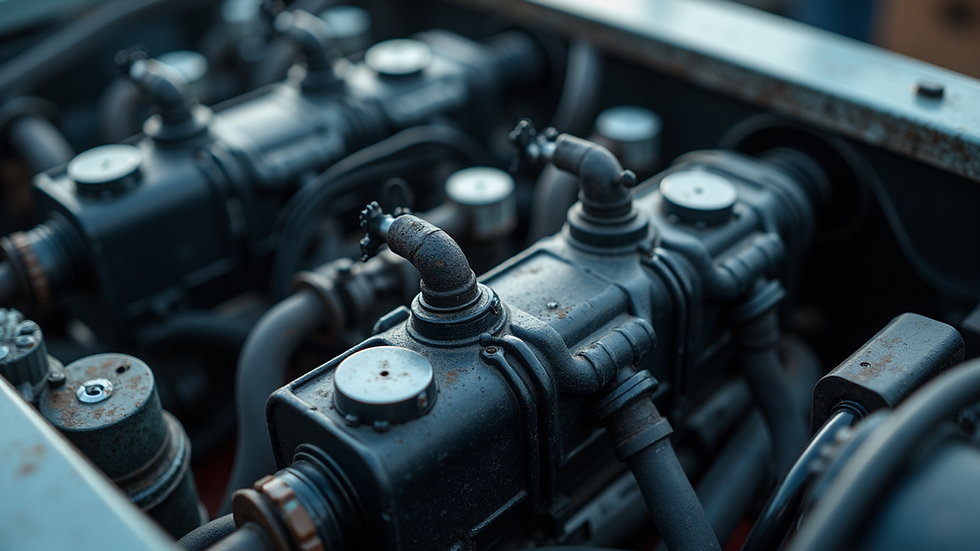
Fuel system components are critical for engine performance.
Diagnosing Specific Engine Issues
Different symptoms require targeted diagnosis. Here are common problems and how to approach them:
Engine Won't Start
Battery dead or weak: Charge or replace battery.
Starter motor failure: Test starter relay and motor.
Fuel delivery problem: Check fuel pump operation.
Ignition system fault: Inspect spark plugs and ignition coils.
Engine Overheating
Blocked water intake: Remove debris from intake screens.
Faulty water pump: Test impeller and replace if damaged.
Low coolant level: Refill coolant reservoir.
Thermostat stuck closed: Replace thermostat.
Loss of Power
Clogged fuel filter: Replace filter.
Dirty air filter: Clean or replace.
Exhaust blockage: Inspect and clear exhaust system.
Ignition timing off: Adjust timing or consult a technician.
Excessive Smoke
Black smoke: Too much fuel or dirty air filter.
White smoke: Water in fuel or coolant leak.
Blue smoke: Burning oil due to worn piston rings or valve seals.
Unusual Noises
Knocking: Low-quality fuel or engine detonation.
Grinding: Worn bearings or gears.
Hissing: Cooling system leaks or vacuum leaks.

Cooling system parts must be maintained to prevent overheating.
Preventive Maintenance to Avoid Engine Issues
Regular maintenance reduces breakdowns and extends engine life. Follow these practices:
Change engine oil and filters every 100 hours or annually.
Inspect and replace fuel filters regularly.
Flush cooling system after saltwater use.
Check belts and hoses for wear.
Clean or replace air filters.
Test battery and electrical connections.
Use fuel stabilizers during storage.
Run the engine monthly to keep parts lubricated.
Keep a maintenance log to track service dates and parts replaced. This helps spot patterns and plan repairs.
When to Seek Professional Help
Some problems require expert attention. Contact marine engine repair services if you encounter:
Persistent starting issues after basic checks.
Overheating that does not improve after cleaning.
Major oil leaks or low oil pressure.
Engine noises that worsen or change suddenly.
Electrical faults beyond battery and terminals.
Complex fuel system repairs or injector cleaning.
Our company offers fast, reliable repairs in Florida. We help boat owners get back on the water quickly with expert diagnostics and quality parts.
Keep Your Engine Running Smoothly
Marine engines face harsh conditions. Saltwater, vibration, and heavy use demand careful attention. Use these troubleshooting tips to catch problems early. Perform regular maintenance to avoid costly repairs. When needed, rely on professional marine engine repair services to keep your boat running strong.
Stay proactive. Inspect your engine before every trip. Address small issues before they grow. This approach ensures safe, enjoyable time on the water every time you set sail.


Comments